10 Best Lithium Batteries for Off-Grid Solar in 2026
Looking for the best lithium battery for off-grid solar? This roundup helps you compare top options that power cabins, RVs, and remote setups when the grid is far away. You’ll find a mix of high-capacity packs and reliable charging gear, all chosen with safety, longevity, and value in mind for off-grid living.
Quick Product Comparison
Our Top 10 Best Lithium Battery For Off-Grid Reviews – Expert Tested & Recommended
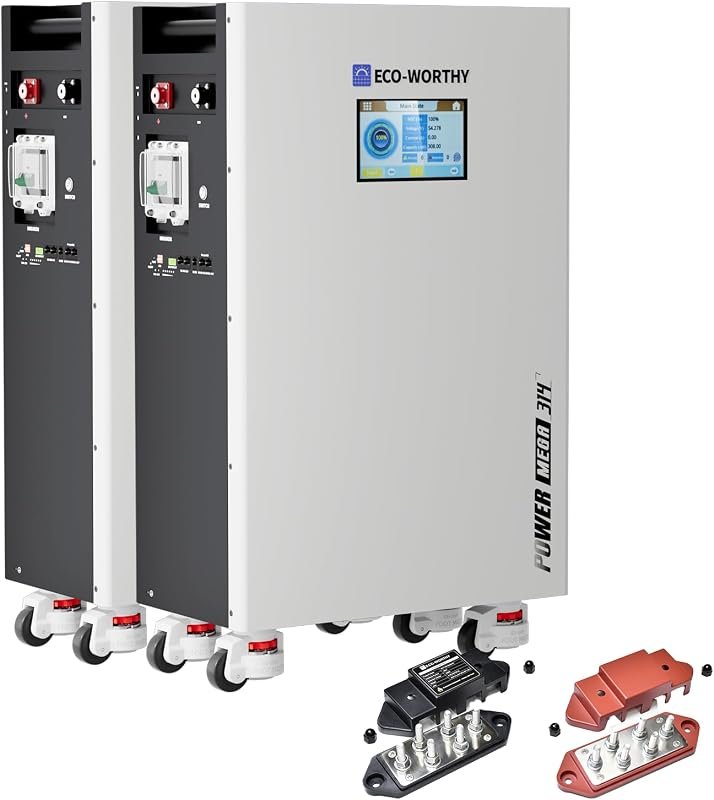
1. ECO-WORTHY Powermega LiFePO4 Battery
intro text here (2-3 sentences only)
Key Features That Stand Out
✓ 16.07kWh high capacity for extended off-grid use
✓ UL1973 certified for safety and reliability
✓ 200A smart BMS with active balancing
✓ Scales with up to 15 units for larger setups
Why We Recommend It
Best Choice for long-term off-grid living thanks to safety certification, big capacity, and a robust BMS. This battery family is built to handle daily cycling with confidence.
Best For
Best for full-time off-grid homes or cabins needing substantial energy throughput and easy expansion.
Pros and Cons
Pros:
- High energy capacity supports longer autonomy
- Strong safety certification and warranty
- Active balancing improves longevity
- Scalable for larger systems
Cons:
- Heavy and requires proper mounting
- Higher upfront cost
- Complex installation for beginners
Customer Reviews
Customer Review: “Powerful and reliable in our off-grid cabin. The 16 kWh capacity means fewer frequent recharges.” – Rob S.
Customer Review: “The warranty gave us confidence; setup was straightforward with a good BMS.” – Elena T.
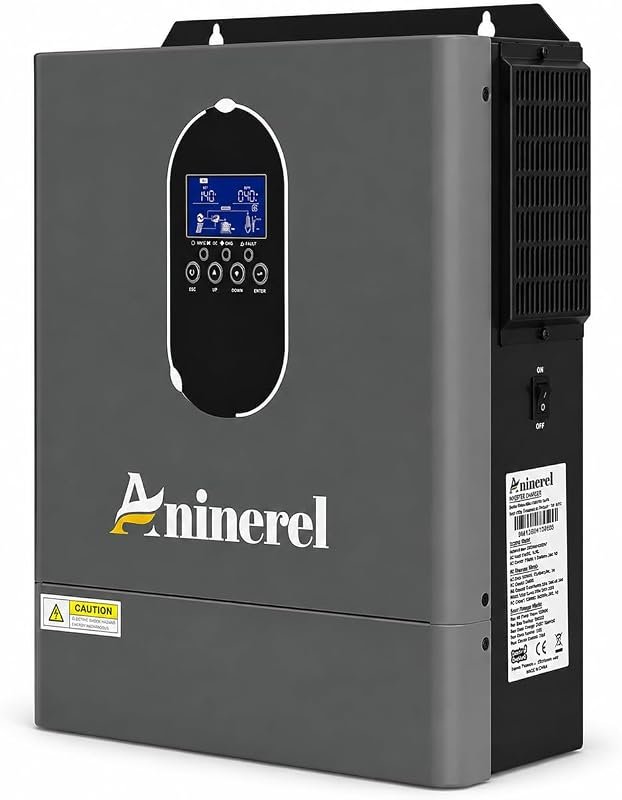
2. 4200W 24V Solar Hybrid Inverter
intro text here (2-3 sentences only)
Key Features That Stand Out
✓ 4200W continuous pure sine wave output
✓ 120A MPPT charging for fast solar input
✓ 6200W PV input capacity for heavy sun days
✓ WiFi module for remote monitoring
Why We Recommend It
Great for off-grid systems that mix solar with battery storage. Its robust MPPT and remote monitoring help keep your lithium setup efficient.
Best For
Ideal for mid-to-large off-grid solar arrays pairing with LiFePO4 batteries.
Pros and Cons
Pros:
- High solar input flexibility
- Reliable power output
- Remote monitoring feature
- Good expansion potential
Cons:
- Inverter is separate from battery pack
- Wiring and setup can be complex for beginners
Customer Reviews
Customer Review: “The inverter integrates well with our LiFePO4 bank and handles peak loads nicely.” – Mia R.
Customer Review: “Setup was a bit technical, but the performance is solid.” – Kevin L.
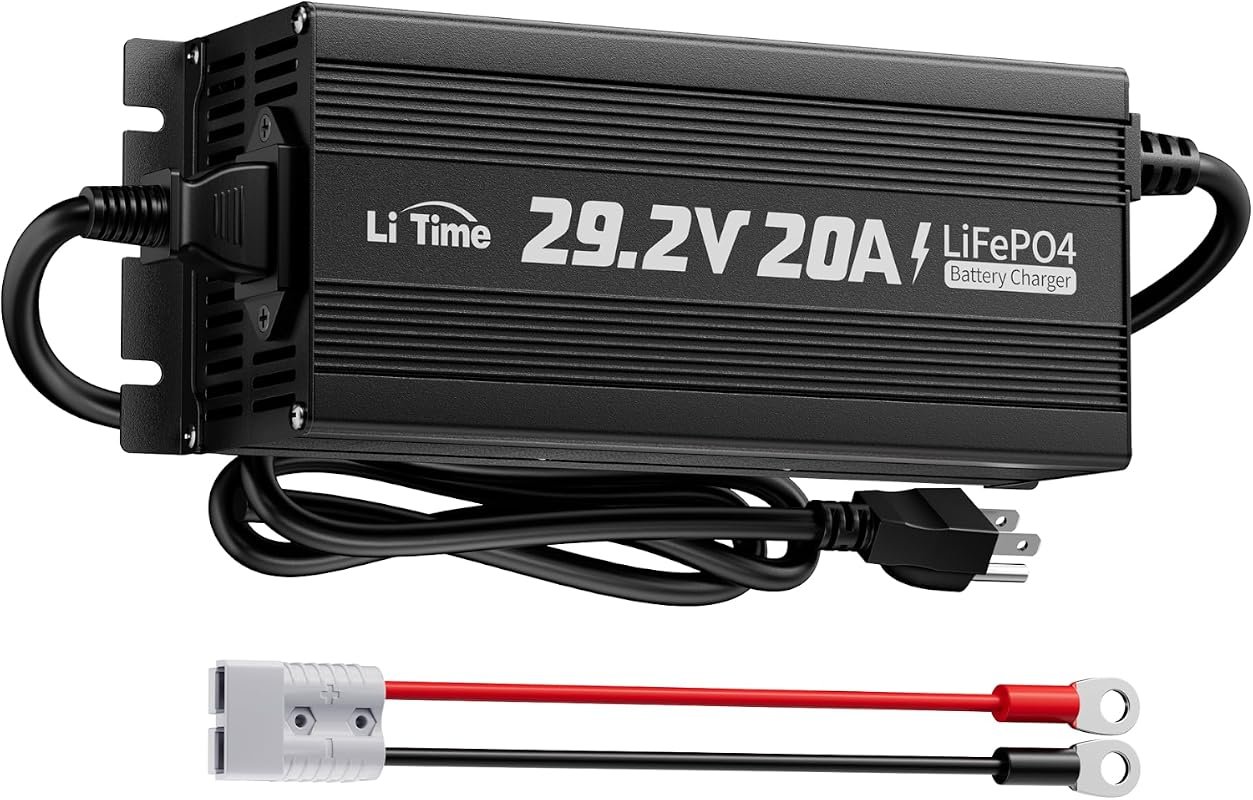
3. LiTime 24V 20A Lithium Battery Charger
intro text here (2-3 sentences only)
Key Features That Stand Out
✓ Compact mini charger for 24V LiFePO4 systems
✓ 29.2V output for versatile charging
✓ Built-in safety features and 0V wake-up
✓ Lightweight and easy to mount
Why We Recommend It
Best budget-friendly charging option that still delivers reliable performance for a small LiFePO4 bank.
Best For
Small off-grid setups or portable solar rigs needing a compact charger.
Pros and Cons
Pros:
- Affordable entry point
- Good for 24V LiFePO4 systems
- Lightweight and simple to install
Cons:
- Not suitable for large banks
- Not waterproof in outdoor installs
Customer Reviews
Customer Review: “Perfect for my small off-grid cabin. Compact and reliable.” – Dana P.
Customer Review: “Solid performance for the price, though a bit slow for huge banks.” – Aaron G.
4. LiTime 12V 20A Lithium Charger
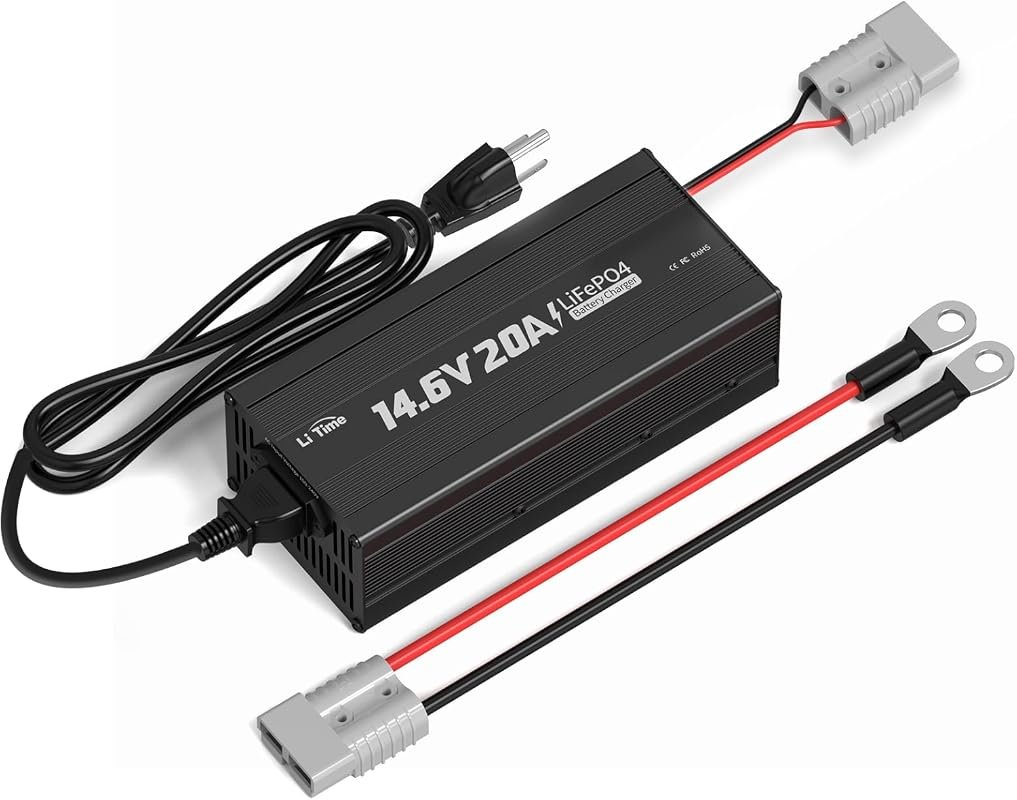
intro text here (2-3 sentences only)
Key Features That Stand Out
✓ 14.6V output suitable for many LiFePO4 packs
✓ 0V activation to wake deeply discharged cells
✓ Compact, space-saving design
✓ Solid safety protections
Why We Recommend It
Great for refreshing older LiFePO4 packs or adding a smart charger to a medium-sized off-grid system.
Best For
Medium off-grid rigs needing quick recharge with 0V wake-up feature.
Pros and Cons
Pros:
- Fast charging capability
- 0V activation helps recover discharged packs
- Compact footprint
Cons:
- Better suited for smaller banks
- Higher-end charger price
Customer Reviews
Customer Review: “Recovered a nearly dead pack quickly. Works as advertised.” – Taylor B.
Customer Review: “Note the size; fits in my cabinet nicely.” – Priya K.
5. LiTime 24V 20A Lithium Battery Charger
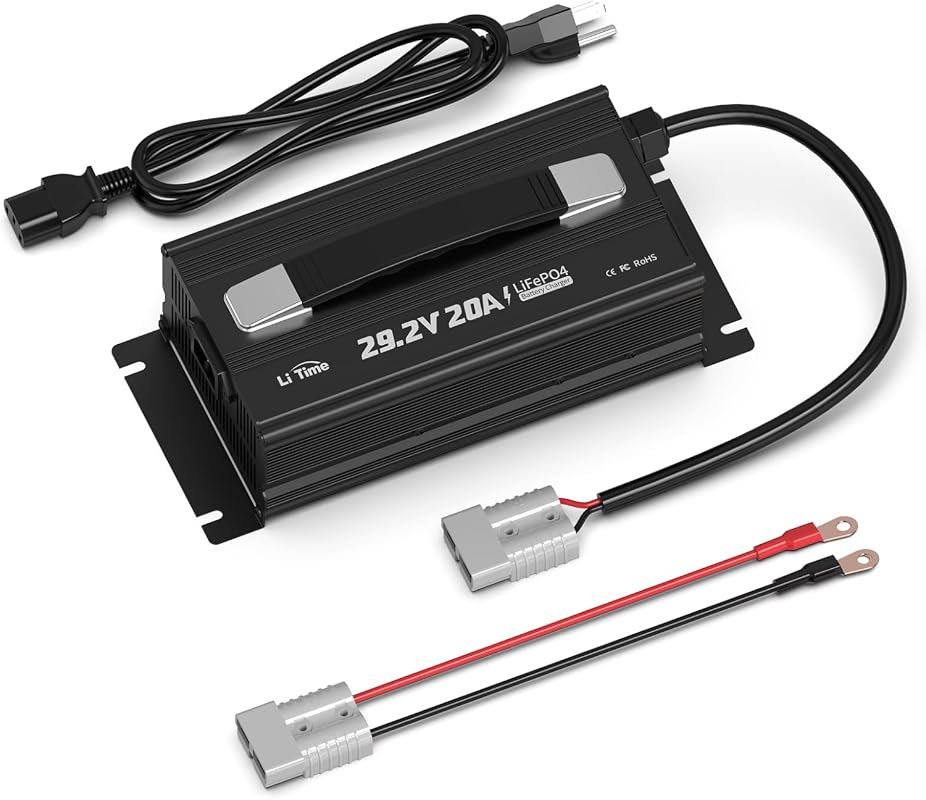
intro text here (2-3 sentences only)
Key Features That Stand Out
✓ 29.2V output designed for 24V LiFePO4 systems
✓ 0V activation feature for wake-up
✓ Modern protection circuitry
✓ User-friendly interface
Why We Recommend It
Solid choice for upgrading a 24V battery bank with a reliable, wake-up-enabled charger.
Best For
Owners expanding a 24V LiFePO4 setup or refreshing an old charger.
Pros and Cons
Pros:
- Compatibility with many 24V packs
- Wake-up feature adds resilience
- Reasonable price for capacity
Cons:
- Bulkier than tiny chargers
- May require additional cables
Customer Reviews
Customer Review: “Wake-up feature is a real time-saver in our off-grid system.” – Lisa M.
Customer Review: “Reliable and easy to install.” – Omar F.
6. LiTime 12V 60A Lithium Battery Charger
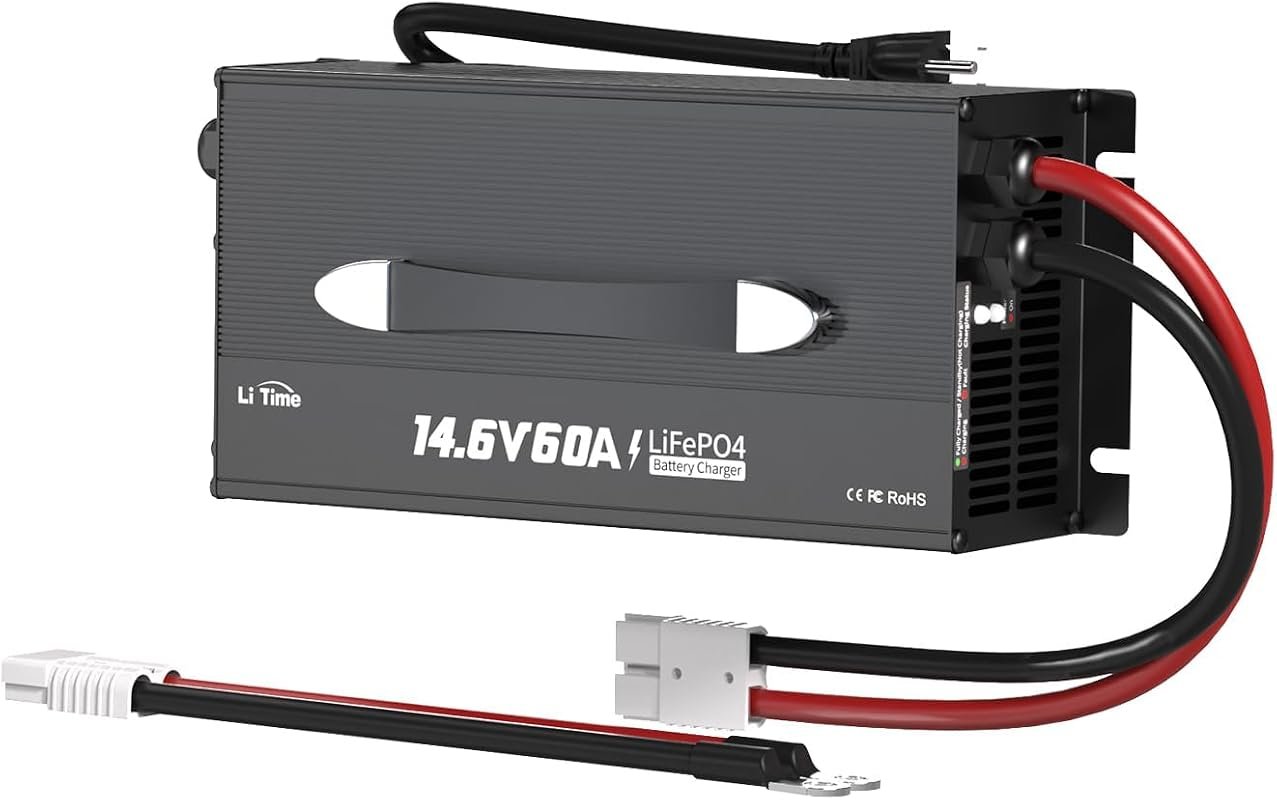
intro text here (2-3 sentences only)
Key Features That Stand Out
✓ 60A fast charging for mid-size LiFePO4 packs
✓ Robust protection features
✓ Good for RVs and small off-grid setups
✓ Simple installation
Why We Recommend It
Reliable charger with strong output for medium-sized batteries; a practical upgrade for growing off-grid rigs.
Best For
RVs or small off-grid stations needing faster charge from 12V systems.
Pros and Cons
Pros:
- Strong charging current
- Good for upgrading existing setups
- Compact form factor
Cons:
- Not ideal for very large banks
- Requires compatible LiFePO4 pack
Customer Reviews
Customer Review: “Fast charging and dependable.” – Sam D.
Customer Review: “Compact and efficient for my 12V system.” – Nina W.
7. LiTime 12V 20A Lithium Charger
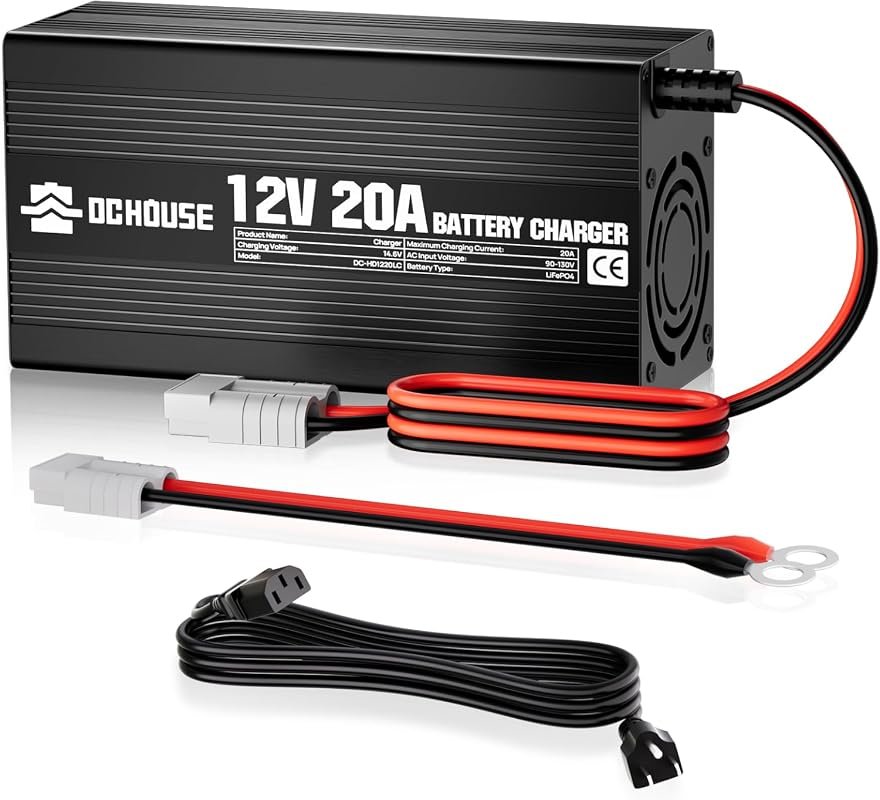
intro text here (2-3 sentences only)
Key Features That Stand Out
✓ Quick battery connector for secure plug-in
✓ 0V activation to wake BMS-protected packs
✓ Easy to install and wire
✓ Compatible with common LiFePO4 systems
Why We Recommend It
Simple, reliable charger with easy setup for transitional off-grid users.
Best For
New off-grid builders needing an uncomplicated charger option.
Pros and Cons
Pros:
- Plug-and-play style
- Wake-up function helps use deeply discharged packs
- Affordable
Cons:
- Limited to 12V systems
- Not ideal for very large banks
Customer Reviews
Customer Review: “Very easy for a DIY off-grid build.” – Alex J.
Customer Review: “Works as expected with LiFePO4 batteries.” – Nora H.
8. LiTime 12V 80A Lithium Battery Charger
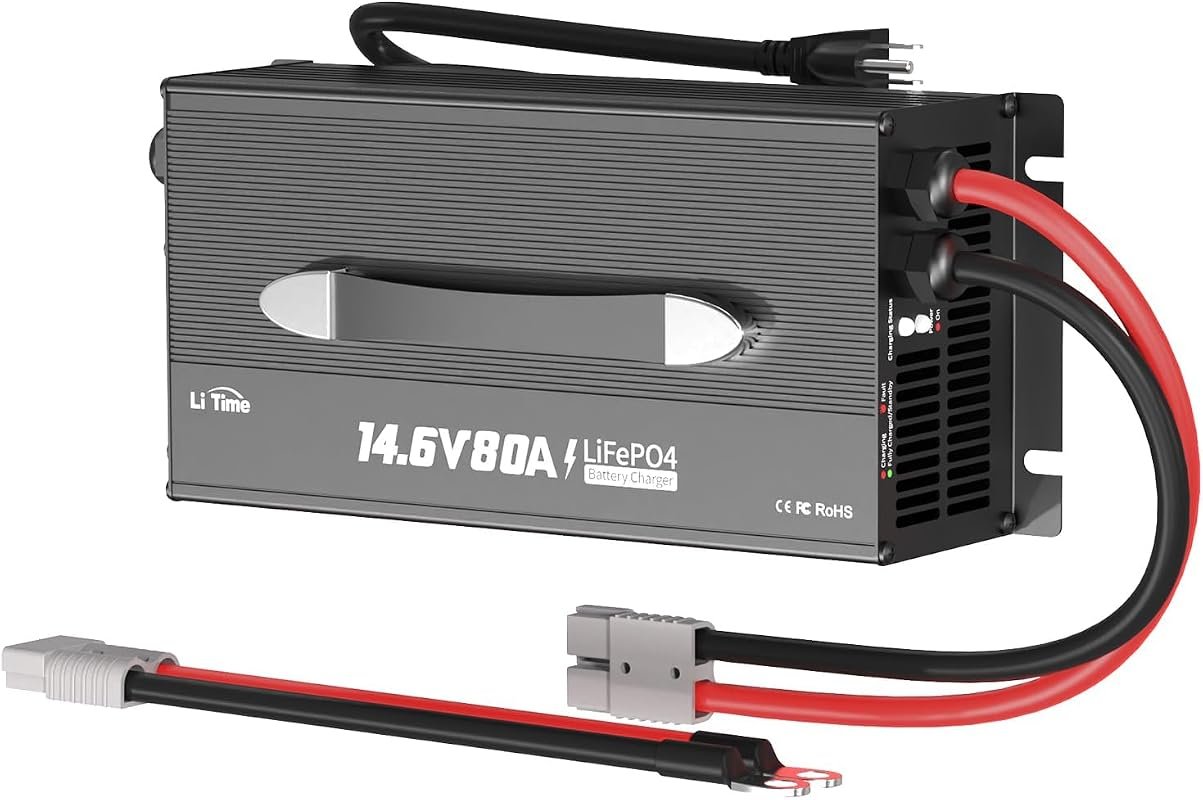
intro text here (2-3 sentences only)
Key Features That Stand Out
✓ High current output for fast charging
✓ 0V wake-up to revive dead cells
✓ Suitable for larger LiFePO4 packs
✓ Durable build
Why We Recommend It
Best for quickly charging bigger lithium packs without fuss.
Best For
Larger off-grid systems needing quick top-ups.
Pros and Cons
Pros:
- Strong 80A output
- Wake-up feature
- Relatively simple wiring
Cons:
- Not ideal for tiny setups
- Heavier than smaller chargers
Customer Reviews
Customer Review: “Excellent for rapid charging and reconditioning older packs.” – Sam R.
Customer Review: “Solid performance with LiFePO4 banks.” – Lucy G.
9. LiTime 12V 40A Charger with MPPT
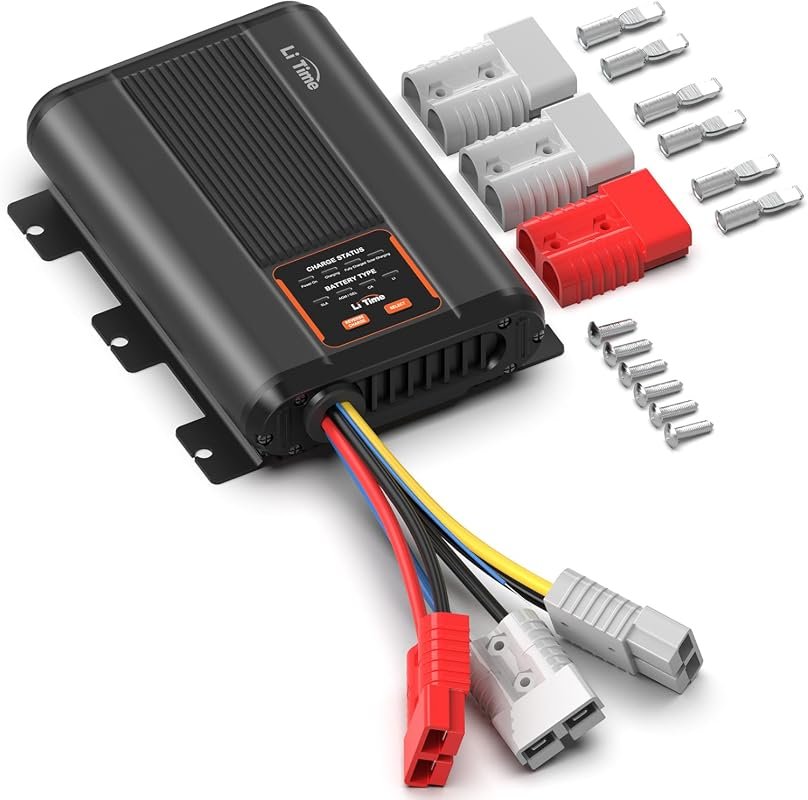
intro text here (2-3 sentences only)
Key Features That Stand Out
✓ MPPT charging for efficient solar utilization
✓ DC-DC charging compatibility
✓ All-in-one charging capability
✓ Built-in protections
Why We Recommend It
All-in-one charger that can streamline a small off-grid battery system with MPPT support.
Best For
Compact off-grid systems needing MPPT and DC-DC charging.
Pros and Cons
Pros:
- Efficient MPPT charging
- Versatile charging options
- Practical for small installs
Cons:
- Not ideal for large banks
- Requires appropriate wiring
Customer Reviews
Customer Review: “MPPT works great with my solar panels.” – Dan C.
Customer Review: “A solid charger for a small off-grid setup.” – Priya S.
10. LiTime 3000W Inverter Charger
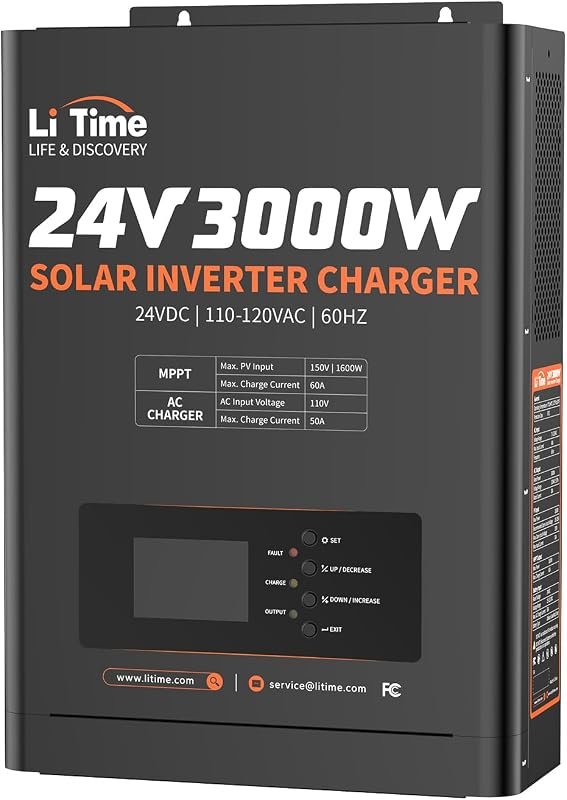
intro text here (2-3 sentences only)
Key Features That Stand Out
✓ All-in-one inverter charger with MPPT
✓ 24V DC to 120V AC output
✓ UPS-capable for steady power
✓ Flexible charging modes
Why We Recommend It
Great for a robust, all-in-one solution in larger off-grid systems, reducing the number of separate components needed.
Best For
Large off-grid installations needing UPS and MPPT functionality.
Pros and Cons
Pros:
- Integrated inverter and charger
- Strong MPPT performance
- UPS capability adds reliability
Cons:
- Higher cost than separate units
- Heavier and larger footprint
Customer Reviews
Customer Review: “Powerful all-in-one unit; simplifies the system.” – Jake L.
Customer Review: “Handled a full night of load without issue.” – Maria T.
Complete Buying Guide for Best Lithium Battery For Off-Grid Solar
Essential Factors We Consider
When choosing the best lithium battery for an off-grid solar setup, look for safety certifications, cycle life, and compatibility with your inverter or charger. Capacity matters, but so do depth of discharge, BMS features, and ease of expansion for growing cabins or RVs.
Budget Planning
Plan for the total cost of battery, wiring, and any expansion later. LiFePO4 options often cost more upfront but last longer and recharge safely, which saves money over time.
Final Thoughts
For most off-grid homes, a high-capacity LiFePO4 pack offers the best balance of safety and longevity. Pair it with a capable inverter/charger to maximize performance and reliability.
Frequently Asked Questions
Q: What is the best lithium battery for off-grid solar?
A: The best choice depends on your needs. For long life and safety, LiFePO4 packs with UL1973 certification are strong candidates, especially when paired with a capable inverter and BMS.
Q: Are LiFePO4 batteries safe for off-grid solar?
A: Yes. LiFePO4 chemistry is known for stability and a lower risk of thermal runaway compared with other lithium chemistries.
Q: How many cycles do LiFePO4 batteries last?
A: Typical LiFePO4 packs provide thousands of cycles, with many warranties around 5–10 years and cycles that can exceed 2000–7000 depending on usage and temperature.
Q: Can LiFePO4 be used in cold weather?
A: LiFePO4 performance can drop in cold conditions, but modern BMS and proper insulation help maintain safe operation. Consider a heat management strategy in cold environments.
Conclusion: Whether you’re powering a remote cabin or a parked RV, the right lithium battery for off-grid solar makes a big difference in reliability and peace of mind. If you’re starting from scratch, the ECO-WORTHY Powermega stands out as a strong all-around pick, with strong capacity and solid safety features. If you want a high-power inverter option as part of a larger system, the 4200W Solar Hybrid Inverter is a worthy companion. For smaller budgets or compact setups, several LiTime chargers provide dependable charging support that won’t break the bank. Explore the options, think about your daily load, and choose a package that fits your energy goals.
Ready to upgrade your off-grid power? Check prices on Amazon for the products above to confirm current deals and availability, and start building a more reliable solar setup today.